
Family businesses are among the most influential organizations in the global economy. Many were built through the vision, sacrifice, relationships, and intuition of a founder long before formal management structures or succession plans existed.
That entrepreneurial model can create extraordinary companies. But as the organization grows, the practices that made its early success possible may no longer be enough for its next stage.
Operations become more complex. New generations enter the business. Non-family executives assume greater responsibility. Customers, employees, investors, and financial institutions expect greater transparency and accountability.
At that point, professionalization becomes necessary.
The mistake is believing this transition can be completed simply by hiring an experienced CEO, creating a board, or giving new titles to the next generation. Professional management is built gradually through clearer roles, stronger governance, disciplined leadership, and trust.
And it cannot be rushed.
Professionalization Is Not the Removal of the Family
Professionalization can create resistance. Founders may hear it as a suggestion that the family is no longer qualified to lead. The next generation may see it as a threat. Long-serving employees may worry that outsiders will disregard the culture that made the company successful.
But professionalization should not mean replacing the family’s identity with a generic corporate model.
Its purpose is to preserve the strengths of family ownership while reducing the risks that appear when family relationships, ownership, and management responsibilities become difficult to separate.
Family businesses often possess advantages that larger institutions try to recreate: long-term thinking, strong customer relationships, commitment to employees, speed of execution, and a clear sense of purpose. PwC’s Global Family Business Survey has examined trust as one of the defining strengths (and challenges) of family enterprises.
Professional management should protect those advantages, not erase them.
The Need Often Appears Before Anyone Announces It
A family business rarely reaches one obvious moment when it becomes ready to professionalize. The need usually appears through a series of pressures.
The founder becomes involved in too many decisions. Managers wait for family approval before acting. Roles are shaped around individuals instead of business needs. Succession conversations are postponed. External executives are given responsibility without genuine authority.
These are not necessarily signs of failure. They are often signs that the company has outgrown an informal leadership model.
The International Finance Corporation identifies weak governance, unmanaged growth, and insufficient succession planning as common threats to the continuity of family-owned companies.
The best time to begin professionalizing is before the organization is forced to do so under pressure. Over more than three decades of advising family-owned companies as an executive search consultant and board advisor, I have found that the need for professionalization rarely arrives as a single defining moment. More often, it emerges gradually as growth, complexity, and succession begin to outpace the informal leadership structures that once served the business so well.
Hiring an Outside Executive Is Only One Step
Bringing in an external CEO, CFO, COO, or human resources leader can introduce experience, systems, objectivity, and capabilities that do not yet exist inside the organization.
However, even an exceptional executive will struggle if the family has not clarified what authority the position truly carries.
Who makes the final decision on strategy? Can the CEO select and evaluate the leadership team? What happens when a family member bypasses the reporting structure? Which decisions belong to management, the board, or the owners?
Without clear answers, the executive may hold the title while the family continues leading through informal conversations. Employees quickly learn that the formal structure is not the real structure.
The IFC Family Business Governance Handbook emphasizes the importance of separating the responsibilities of family members, owners, directors, and senior management.
Before recruiting an external leader, the family must be prepared to give that person a real mandate.
The Next Generation Needs Preparation, Not Entitlement
Professionalization does not automatically mean leadership must move outside the family. A family member may be the strongest person to lead the company.
But family connection cannot be the only qualification.
Future leaders need meaningful experience, measurable performance, exposure to different areas of the business, and, in many cases, experience outside the family company. They should be evaluated against the capabilities the organization will need in the future, not only against the founder’s leadership style.
As Harvard Business Review explains in “Merit or Inherit: How to Approach Succession in a Family Business,” family enterprises must balance continuity with merit.
Ownership may be inherited. Leadership must still be earned.
Governance Must Develop Alongside Management
A professional executive team cannot compensate indefinitely for weak governance.
As the company grows, it needs mechanisms that allow difficult decisions to be discussed without turning every business disagreement into a family conflict. These may include a functioning board, independent directors, a family council, employment policies for relatives, and a formal succession process.
The purpose is not bureaucracy. It is clarity.
Who may work in the company? What qualifications are required? How is performance evaluated? How will future leaders be selected?
Harvard Business Review’s discussion of the formal policies that protect family businesses highlights the risks of relying exclusively on trust, inherited authority, and unwritten expectations.
Governance creates a structure in which family members and professional executives can succeed together.
Why the Transition Cannot Be Rushed
Changing an organizational chart is easier than changing how decisions are truly made.
Trust must develop between the family and external executives. Founders need time to transfer knowledge and relationships without continuing to control every decision. Incoming leaders need to understand the organization’s history. Family members need clarity about how their roles will evolve. Employees need evidence that the new structure is real.
A 2026 Deloitte Private survey found that 78% of surveyed family-business executives expected a CEO transition within the following decade, while many still faced concerns about successor readiness and the willingness of current leaders to step aside.
Moving too slowly can leave the business vulnerable. Moving too quickly can create resistance, loss of institutional knowledge, and a leadership model that appears professional on paper but does not work in practice.
The goal is not speed. It is readiness.
Protecting Legacy and Performance
The strongest family-business transitions do not force a choice between tradition and professionalism.
They preserve the founder’s entrepreneurial spirit while reducing dependence on the founder. They prepare family members to contribute where they are most capable. They bring in outside leaders when the company needs new experience. They create accountability without destroying agility.
Professionalization is ultimately an act of stewardship.
It asks the current generation to build an organization that can perform without relying exclusively on its authority, presence, or personal relationships.
Letting go of certain decisions does not mean letting go of the legacy.
Done well, the transition from a family-managed business to a professionally managed family enterprise makes that legacy stronger and more capable of surviving the generations to come.
At Barbachano International, we have had the privilege of advising family-owned companies throughout the United States, Mexico, and Latin America for more than three decades. Our work extends beyond executive search to include leadership assessment, succession planning, board advisory, executive coaching, and organizational consulting, helping family enterprises strengthen governance, attract exceptional leadership, and build organizations capable of succeeding across generations.
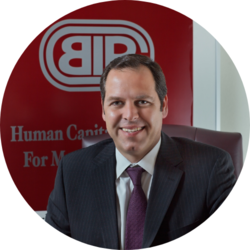
By Fernando Ortiz-Barbachano
President & CEO of Barbachano International
Barbachano International (BIP) is the premier executive search and leadership advisory firm in the Americas with a focus on diversity & multicultural target markets. Since 1992, BIP and its affiliates have impacted the profitability of over 50% of Fortune 500 Companies. BIP has been recognized by Forbes as Americas’ Best Executive Search Firms and currently ranks #8 and #3 on the West Coast.