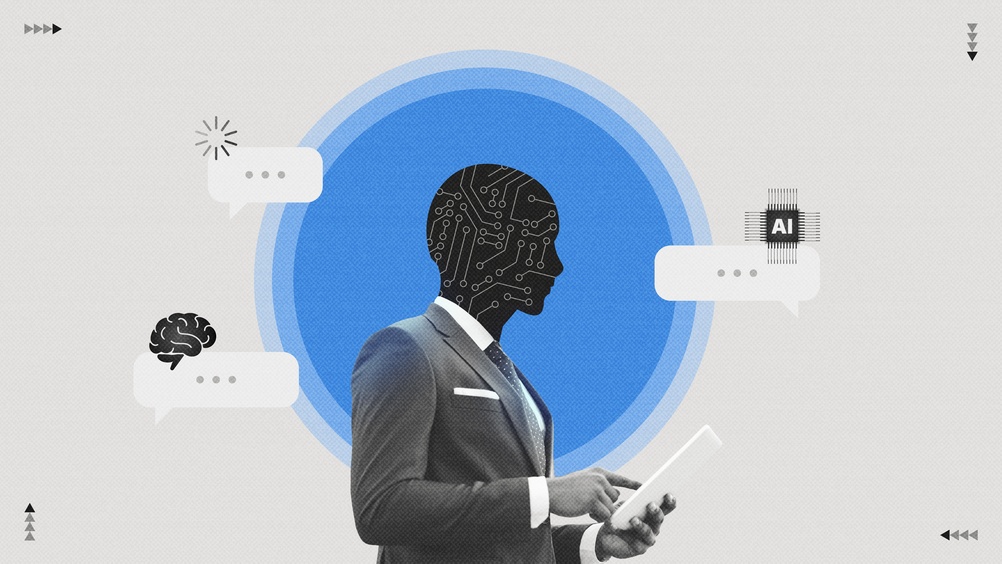
For years, professionals were told that AI would change the way they work. That future is arriving faster than many expected.
The question heading into 2027 is no longer whether professionals will use artificial intelligence. In many functions, that is becoming part of the basic expectation. The more consequential question is what happens to the value of a professional once AI can perform a meaningful portion of the work they were previously paid to do.
A career divide is emerging between professionals who use AI to work faster, analyze more information, and improve decisions, and those whose value remains concentrated in tasks that technology can increasingly reproduce.
Your next competitor for a role may simply be another professional who knows how to use AI better.
AI literacy is becoming a baseline skill
Not long ago, knowing how to use generative AI could differentiate a candidate. That advantage is becoming less distinctive.
LinkedIn’s 2026 Labor Market Report found that U.S. jobs requiring AI literacy skills grew 70% year over year. McKinsey has similarly described AI fluency as a foundational workforce capability.
Knowing that AI exists is no longer enough. The competitive advantage comes from understanding where it can improve your work, where it cannot, and how to combine it with expertise that technology does not easily reproduce.
Your job title may survive while your job changes
The conversation about AI often focuses on whether entire occupations will disappear, but that can obscure what is already happening inside existing roles.
SHRM’s 2026 research on automation and job displacement estimates that 20% of U.S. wage and salary employment already has at least half of its tasks automated. However, only 5.1% currently meets SHRM’s definition of high automation displacement risk.
A profession does not need to disappear for the value of certain skills within it to decline. An analyst may still be needed, but spending hours compiling information may become less valuable. A marketing leader may still be needed, but producing basic marketing content may no longer differentiate them.
The role may survive, but the value within it shifts.
Experience alone will not protect a career
Ten or twenty years in a profession can create tremendous value when those years produce judgment, pattern recognition, relationships, industry knowledge, and better decision-making. But experience becomes less protective when it primarily represents repetition.
Professionals should periodically ask themselves: What do I know that someone with fewer years of experience does not? What decisions can I make better because of what I have seen? What part of my contribution would still matter if AI could complete half of my routine work tomorrow?
The answers reveal where real professional value lives.
Through our executive search work at Barbachano International, we regularly see that the strongest candidates are not simply those with the longest resumes. The people who stand out are often those who can explain how they use new tools, information, and experience to make better decisions rather than simply produce more work.
For professionals, that means career relevance increasingly depends on demonstrating how their experience translates into better judgment, adaptability, and results.
The safest place is closer to judgment
Routine work has always been vulnerable to technology. AI expands the range of knowledge work that can now be standardized, accelerated, or partially automated.
McKinsey’s research on the skills reset for the AI age suggests that people-centered capabilities face less automation exposure than many routine activities.
Careers therefore become more defensible as professionals move closer to judgment, problem solving, interpretation, relationship building, negotiation, leadership, and decision-making under uncertainty. AI can support these activities, but it is much harder for AI to assume full responsibility for them.
Do not compete with AI on the work AI does best
There is little career advantage in becoming marginally faster than technology at something technology can perform almost instantly.
Let AI handle the first draft, organize information, identify patterns, summarize meetings, or accelerate research. The professional advantage comes afterward, when experience is used to question the output, recognize what is missing, understand the organizational context, and determine which recommendation will actually work.
The real value is not in producing more information. It is in knowing what to do with it.
Employers will increasingly hire for the combination
The strongest candidates will increasingly combine three things: functional expertise, AI fluency, and human judgment.
Without functional expertise, they may lack the depth to know whether AI’s output is useful. Without AI fluency, they may struggle to compete with colleagues who can produce significantly more. Without judgment, organizations risk receiving faster output without better decisions.
For companies recruiting executives and specialized professionals, the question will increasingly become not only whether a candidate can do the job today, but whether that person can continue increasing their value as the job changes.
That matters in executive search, where organizations are hiring not just for today’s requirements, but for future leadership demands.
The divide is still a choice
The 2027 career divide has not been predetermined. Professionals do not need to become AI engineers, but they do need to understand how the technology affects their work, identify which parts of their role can be accelerated, and strengthen the capabilities that become more valuable when routine execution becomes cheaper.
Most importantly, professionals should stop defining their value by the amount of work they can personally produce.
The professionals who remain competitive will be the ones who know what should be automated, what should not, and where their judgment creates value that technology alone cannot.
By 2027, using AI may no longer make someone exceptional. Not knowing how to create value alongside it might make them replaceable.

By Fernando Ortiz-Barbachano
President & CEO of Barbachano International
Barbachano International (BIP) is the premier executive search and leadership advisory firm in the Americas with a focus on diversity & multicultural target markets. Since 1992, BIP and its affiliates have impacted the profitability of over 50% of Fortune 500 Companies. BIP has been recognized by Forbes as Americas’ Best Executive Search Firms and currently ranks #8 and #3 on the West Coast.