
Every successful company owes its growth to the leaders who helped build it.
But one of the hardest realities for any CEO or board is recognizing that the leadership team responsible for yesterday’s success may not be the one equipped to deliver tomorrow’s growth.
One executive is hired to solve an immediate problem. Another is promoted because the company needs a trusted leader. Over time, the organization develops a team that reflects the business it has been.
That team may have opened markets, stabilized operations, strengthened customer relationships, or guided the company through difficult periods.
But the leadership team that helped a business reach its current stage is not automatically the team it needs for the next one.
Recognizing this does not diminish past contributions. It acknowledges that when the business changes, the leadership mandate changes with it.
Growth Changes What Leadership Requires
An entrepreneurial company may initially benefit from leaders who move quickly, operate informally, and remain close to every decision.
As the company grows, those same behaviors can create bottlenecks.
The next stage may require executives who can build scalable systems, delegate effectively, manage through other leaders, and make enterprise-level decisions without constant CEO involvement.
A company entering new markets may need international experience. A business pursuing acquisitions may need integration expertise. An organization investing in artificial intelligence may need leaders who can connect technology with commercial priorities, talent, and risk.
The titles may remain the same, but the responsibilities behind them have changed.
As Harvard Business Review explains, companies should evaluate leadership teams against their future strategy, not only their past results.
The Warning Signs Are Usually Visible
Leadership misalignment rarely happens overnight.
Strategic meetings drift back into operational details. Decisions take longer. The CEO becomes the primary link between functions because executives struggle to resolve issues together.
Ambitious initiatives may also fail to translate into execution. New markets, digital programs, and transformation plans are approved, but the leadership team continues prioritizing what worked in an earlier stage.
Another warning sign is weak delegation. Senior executives remain involved in decisions that should happen several levels below them, limiting the development of future leaders.
The clearest signal is a gap between strategy and executive behavior. When the business needs innovation but leadership focuses mainly on control, there is a mismatch. When the company needs collaboration but executives protect functional territory, there is a mismatch.
According to McKinsey, strong executive teams perform better when they have a clear mandate, the right capabilities, and shared ownership of the company’s most important decisions.
Loyalty Can Complicate the Decision
Leadership transitions are especially difficult when executives have been with the company for many years.
These leaders may have taken risks, built the culture, developed key relationships, and helped the organization survive difficult periods. Loyalty toward them is understandable. But loyalty should not prevent an honest assessment of what the company now requires.
Keeping someone in a role that has outgrown their strengths can create frustration, weaken performance, and delay an unavoidable conversation.
The answer is not always replacement. Some leaders can evolve through coaching, development, stronger support, or redesigned responsibilities. The key is distinguishing between a development gap and a fundamental mismatch.
Assess the Team Against the Future
Traditional leadership reviews focus on past performance: Did the executive meet targets? Did the function deliver? Is the leader respected?
Those questions matter, but they are not enough. A future-oriented assessment begins with strategy.
What must the company accomplish over the next three to five years? Which capabilities will become more important? Where will complexity increase? How will the organization need to operate differently?
The company can then ask:
- Do we have the capabilities required by the next stage?
- Are executives operating at an enterprise level?
- Can this group work as one leadership team rather than separate departments?
- Does each leader have the ability and desire to evolve?
A company may have several strong individual executives and still lack an effective leadership team. As PwC’s research on business reinvention suggests, transformation often requires new mindsets, decision-making processes, and ways of working across the C-suite.
The Answer Is Not Always External Hiring
When organizations identify leadership gaps, some move too quickly toward external recruitment. Others wait too long because they fear disrupting the culture.
The right response may include executive development, internal succession, clearer accountability, redesigned roles, selective external hiring, or a combination of these actions.
Some long-tenured executives may remain highly valuable in different roles. Others may grow into the new mandate with support. In certain cases, however, an external leader is necessary to introduce capabilities that do not exist internally.
External recruitment should not be viewed as proof that the existing team failed. It is one way to align leadership capacity with strategic ambition.
The Question Every CEO and Board Should Ask
Companies regularly review their products, technology, investments, and market strategy. Their leadership structure deserves the same discipline.
The most useful question is:
Is this the leadership team we would intentionally build for the business we are becoming?
The answer may confirm the current team, reveal development priorities, or point to difficult changes. Strong CEOs and boards respect what their leaders have built while remaining honest about what the future will require.
Ultimately, the companies that navigate growth most successfully are not always those with the best strategy, they are the ones with the discipline and courage to align their leadership with that strategy before the business outgrows its team.
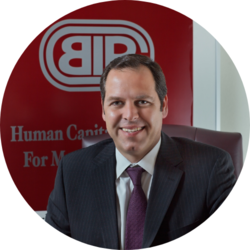
By Fernando Ortiz-Barbachano
President & CEO of Barbachano International
Barbachano International (BIP) is the premier executive search and leadership advisory firm in the Americas with a focus on diversity & multicultural target markets. Since 1992, BIP and its affiliates have impacted the profitability of over 50% of Fortune 500 Companies. BIP has been recognized by Forbes as Americas’ Best Executive Search Firms and currently ranks #8 and #3 on the West Coast.