
Global expansion often looks strongest before it reaches the ground. The strategy is clear, the investment is approved, the market opportunity makes sense, and headquarters has studied the numbers, aligned the board, selected the region, and defined what success should look like.
Then the plan reaches the local operation, and something starts to slow down. Not always visibly or dramatically. Sometimes the first signs are quiet: middle managers hesitate before fully supporting the change, local teams comply without real commitment, communication becomes more careful than honest, and employees wait to see whether the new direction will last. From a distance, this can look like resistance. Up close, it is often something more specific: the company has not yet earned enough local trust to move at the speed of its global ambition.
Local presence is not the same as local trust
Many companies assume that once they have a legal entity, a local leadership team, a plant, a sales office, or a regional structure, they have established themselves in the market. But presence and trust are not the same thing.
A company can be physically present in Mexico, Latin America, or another international market and still be viewed as distant. It can have experienced leaders and still feel disconnected from the reality of the people expected to execute the strategy. It can speak about long-term commitment while local teams quietly wonder whether decisions are being made with enough understanding of the market.
This is where global growth becomes vulnerable. The issue is not always that the strategy is wrong. Sometimes the strategy simply arrives before credibility has been built. Trust is not created by announcing a vision. It is created through repeated evidence that leadership understands the local context, respects the people closest to the work, and will follow through on what it says.
That matters because trust has become a business issue, not just a leadership virtue. PwC’s work on trust points to a recurring gap between what executives believe they understand about stakeholder trust and what employees, customers, and investors actually experience. Deloitte also frames trust as a measurable business asset tied to stakeholder relationships and long-term performance.
The real friction often lives in the middle
When global initiatives struggle, companies often look first at the senior leadership layer. They ask whether the country manager, general manager, plant director, or regional executive is aligned with headquarters. That is important, but it is not enough.
The middle of the organization is where strategy becomes daily behavior. Supervisors, managers, functional leaders, and local department heads are the people who explain decisions, answer questions, absorb frustration, and translate broad priorities into work that teams can understand. If that layer does not believe in the direction, the strategy weakens.
Not because people openly reject it. More often, they slow it down. They add their own interpretation. They protect their teams from what they perceive as another corporate initiative. They wait for clearer signals. They comply with the process without carrying the message with conviction.
This is especially important in cross-border environments, where local teams may already be balancing different expectations from corporate, regional leadership, customers, and the realities of the market. Gallup has long emphasized the central role managers play in employee engagement, and its more recent research has pointed to declining manager engagement as a key factor in broader workplace disengagement. For companies expanding internationally, this should be a warning: if the people closest to execution do not feel equipped, trusted, or aligned, growth can lose energy before senior leaders fully see the problem.
Local trust is built before pressure arrives
One of the mistakes companies make is trying to build trust after the situation becomes difficult. They wait until turnover increases, communication breaks down, a plant launch misses key milestones, a local team becomes frustrated with decisions from headquarters, or a new executive realizes that people are listening politely, but not fully buying in. By then, the leader is not only trying to execute the strategy. They are also trying to repair belief.
In global growth, trust has to be built before pressure arrives, because pressure will come. There will be missed assumptions, cultural misunderstandings, unclear decision rights, talent constraints, customer demands, and moments when headquarters and the local team see the same issue differently.
When trust is already present, those moments become manageable. People speak earlier, share bad news faster, explain local risks more honestly, and give leadership the benefit of the doubt. When trust is missing, the same moments become political. People protect themselves, filter information, avoid direct disagreement, and wait for someone else to raise the concern. That is where execution starts to suffer.
Harvard Business Review has noted that global teams are especially vulnerable to communication gaps, friction, and misunderstandings when leaders do not intentionally create enough context and connection for people to contribute fully. In international growth, that context is not a soft detail. It is part of the operating system.
The best local leaders protect both the strategy and the relationship
This is why the local leader matters so much. The right executive is not simply a representative of headquarters, and they are not only an advocate for the local team. They must be both.
They need the business discipline to carry the strategy forward, but also the local credibility to make people believe the strategy can work. They need to understand what corporate is trying to accomplish, while also knowing which parts of the plan require translation, patience, adaptation, or direct conversation.
That kind of leadership is hard to identify through technical experience alone. A candidate may have managed large teams, launched operations, improved performance, or worked for multinational companies. Those accomplishments matter, but they do not automatically prove that the person can earn trust in a specific market, with a specific workforce, under a specific business mandate. We have seen this happen time and again with many clients.
The real question is deeper: can this leader become credible to the people who must make the strategy real?
For companies entering or expanding in Mexico and Latin America, this is where executive search needs to look beyond the resume. It is not enough to assess industry background, language skills, or functional experience. The search must also evaluate how a leader builds confidence, communicates difficult decisions, reads local dynamics, and earns followership without relying only on authority.
At Barbachano International, this has always been central to how we think about executive search in Mexico, Latin America and cross-border leadership. Since 1992, our work has focused on identifying leaders who can operate across markets and different geographies while staying grounded in the realities of the teams, cultures, and business environments they serve.
Global growth becomes real through local credibility
Global ambition can open the door to new markets, but local trust determines how far that ambition can go. The companies that succeed internationally are not only the ones with strong strategies. They are the ones that understand how those strategies will be received, explained, questioned, and carried out by people on the ground.
That requires leaders who can build belief before asking for speed, who know that credibility is earned in small moments, not only in board presentations, and who can protect the intent of the strategy while respecting the reality of the market.
Because global growth does not break down only when the numbers are wrong. It breaks down when the people closest to execution do not trust the leadership behind the plan.
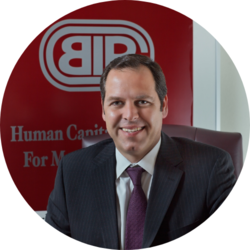
By Fernando Ortiz-Barbachano
President & CEO of Barbachano International
Barbachano International (BIP) is the premier executive search and leadership advisory firm in the Americas with a focus on diversity & multicultural target markets. Since 1992, BIP and its affiliates have impacted the profitability of over 50% of Fortune 500 Companies. BIP has been recognized by Forbes as Americas’ Best Executive Search Firms and currently ranks #8 and #3 on the West Coast.